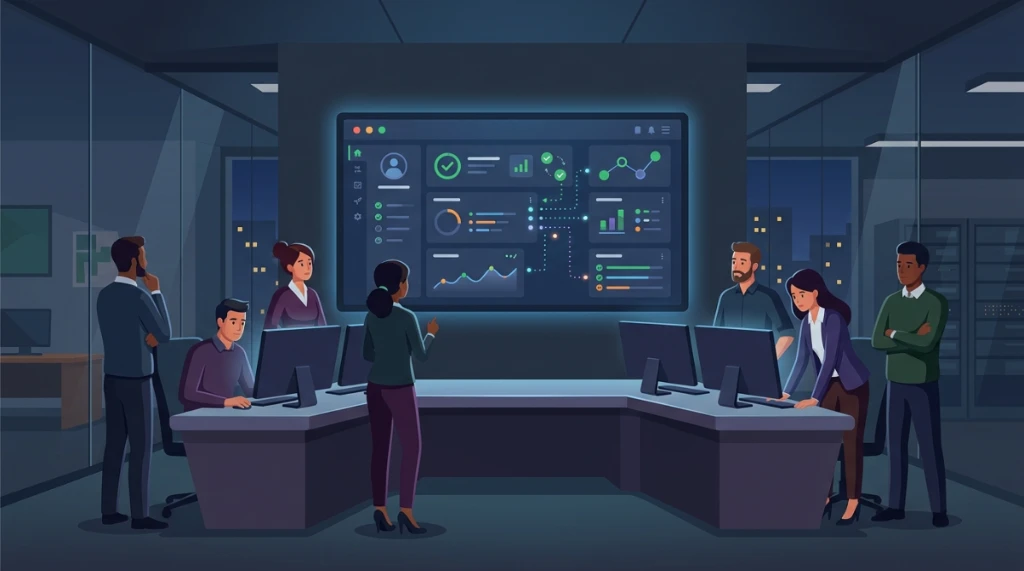
Picture a routine morning at work: you are working support tickets comfortably, and out of nowhere, a production server goes down. Two minutes later, four more servers tumble in a cascade.
Instant chaos breaks loose. It is exactly like poking an anthill with a stick: live chat begins dinging relentlessly. First 1, then 5, 10, 50, 100 concurrent clients flood the queue. Browser tabs pile up, phones ring off the hook, and the team stares at each other with no idea what to say.
Suddenly, the technical lead pops into the internal channel: "Folks, everything dropped! Just paste this standard message in the chat."
The whole team instantly turns into a desperate copy-paste factory. Except the queue does not slow down. Every support agent is juggling 40 or 50 open conversations at once. The ticketing software begins choking under load, the support floor suffocates, and customers waiting 15 minutes for an identical canned reply get furious. They head straight to X to voice their frustration publicly: "Company X is completely offline and support won't even answer!". Minutes later, negative reviews start popping up, angry tickets flood the backlog, and managers are tearing out whatever hair they have left.
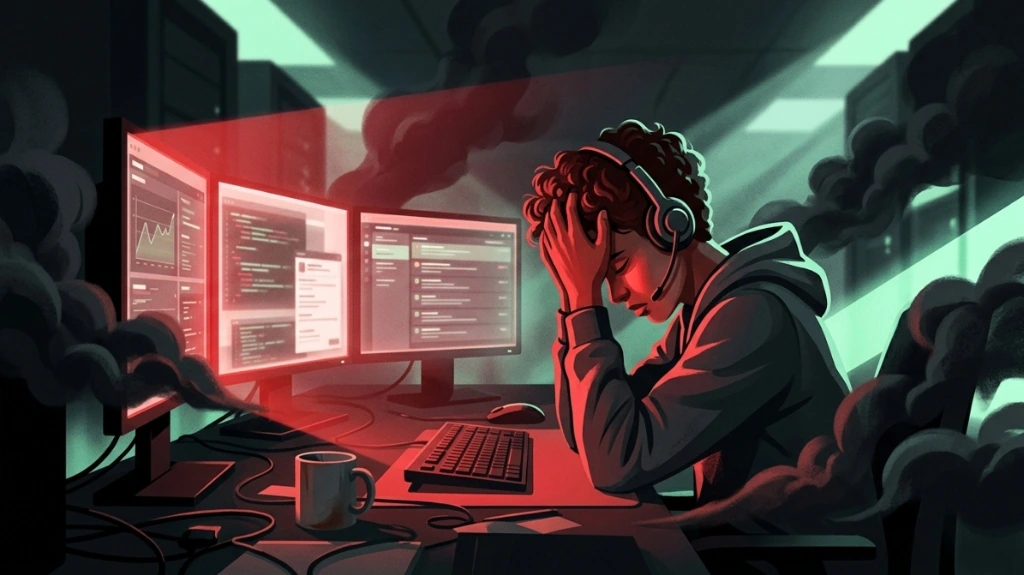
This entire nightmare can be solved with one simple tool: a public status page.
What exactly is a status page?#
A status page is an independent, publicly accessible dashboard that displays the real-time health of your company's core services: whether each service is operational, degraded, offline, or undergoing planned maintenance.
Beyond clean layouts and green 90-day uptime bars, that public dashboard proves your organization operates transparently with the people who pay the bills every month.
When you have this dedicated channel running and an outage strikes, the entire dynamic shifts:
- The incident lead logs into the status dashboard and posts a brief update: "We identified latency across our database cluster and the infrastructure team is actively mitigating the root cause."
- Anyone visiting your main website or client dashboard sees an informative banner at the top: "We are currently resolving an unexpected service interruption. Follow live updates on our status page."
- Even eager customers who immediately open live chat see an automated prompt before an agent even picks up: "We are aware of the disruption affecting server X. You can track minute-by-minute resolution progress directly at status.yourcompany.com."
Just like that, those 50 identical tickets asking "Is it down?", "Did you fix it?", "When is my site coming back?" evaporate. The support team stays calm instead of echoing the same canned sentence, and the engineering crew gets the breathing room needed to fix the actual issue.
Why industry leaders never hide incidents#
Mature technology companies never pretend their servers are invincible. The largest platforms on the internet keep open, public status channels available for anyone to audit:
- Cloudflare Status: tracks individual points of presence (PoPs) worldwide, network routing layers, and detailed post-mortem notes.
- Atlassian Status: showcases real-time availability across Jira, Confluence, Bitbucket, and Trello with minute-by-minute incident logs.
- Riot Games Service Status: categorizes server health by region and game, distinguishing between matchmaking issues, store queues, and core platform outages.
None of these organizations lose credibility by admitting a technical fault. On the contrary: they earn trust because they proactively communicate what went wrong before the customer spends twenty minutes guessing whether their local router rebooted.
What behavioral psychology teaches us about customer silence#
Launching an open status channel solves far more than an operational bottleneck; it directly addresses how people react under stress.
1. Uncertainty aversion and the ambiguity effect#
In behavioral psychology, Daniel Kahneman and Amos Tversky showed that people tolerate concrete bad news far better than complete ambiguity.
When a customer's service stops working and no explanation is provided, their mind does not assume "they are probably restarting a daemon." It assumes the absolute worst: lost data, corporate collapse, or sheer incompetence. Ambiguity generates acute anxiety, which quickly translates into aggressive public venting.

The moment that user sees an amber or red bar with a simple notice reading "we are aware and investigating," their anxiety drops significantly. They may not be thrilled about the disruption, but the uncertainty is gone.

2. The principle of procedural justice#
In organizational psychology, procedural justice shows that a customer's perception of fairness depends on how openly you communicate during an outage, rather than on the technical hiccup itself.
Hardware fails, fiber lines get cut, and bad deployments happen everywhere. What people do not forgive is being kept in the dark or feeling misled by an agent pretending everything is normal. A public status page is procedural transparency in practice.
3. Cognitive overload and support team burnout#
The flip side of the equation is the mental health of your own staff. Cognitive Load Theory shows that continuous context-switching and repetitive friction degrade reasoning capability rapidly.
Forcing support agents to paste the same reply sixty times across separate windows while absorbing customer frustration depletes cognitive reserves within minutes. The result is panicked mistakes, exhausted staff, and an engineering team that takes three times longer to resolve the issue because everyone is operating in fight-or-flight mode.
Practical rules for building your status channel#
If you plan to launch a status page, adhere to three core operational rules:
- Host it completely off-network: never place your status page inside the same datacenter or cluster as your main applications. If your primary infrastructure suffers a blackout, your status page dies along with it. Rely on an isolated third-party platform or static edge provider (such as Cloudflare Pages, GitHub Pages, or dedicated services like Better Stack or Cachet hosted elsewhere).
- Write in clear, human language: avoid cryptic internal jargon like "kernel panic on node-03 following swap misconfiguration." Customers simply need to know: "we identified unexpected slowdowns across our management consoles and are restarting the affected services."
- Keep incident history visible: do not erase resolved incidents the minute systems stabilize. Displaying the past 60 to 90 days proves your organization handles operational reality with maturity and accountability.
Transparency as a standard: systems break, but silence breaks trust#
Hardware breaks, disks wear out, and routing tables flap. Anyone who works with software understands that absolute 100% uptime all year round is a statistical fantasy.

The difference between an amateur setup and a dependable operation is not whether you experience downtime, but how you handle it when it arrives. Hiding problems behind canned copy-pastes and silence burns customer goodwill in minutes. A clean, independent, and honest status page costs virtually nothing to maintain, yet it protects the single most valuable asset your business owns: the trust of the people who depend on your work.
Was this article helpful?
Leave a quick reaction to help prioritize future technical guides:
See also

This post is licensed under CC BY-NC.
Comments
Join the discussion below.
0 comments