Anyone who has spent time working in customer support or service operations has heard the speech during team all-hands: "We don't have customers here, we have partners and friends". On a sales deck, it sounds human, warm, and inspiring. In day-to-day operations, that boundary blur is usually the beginning of complete disarray.
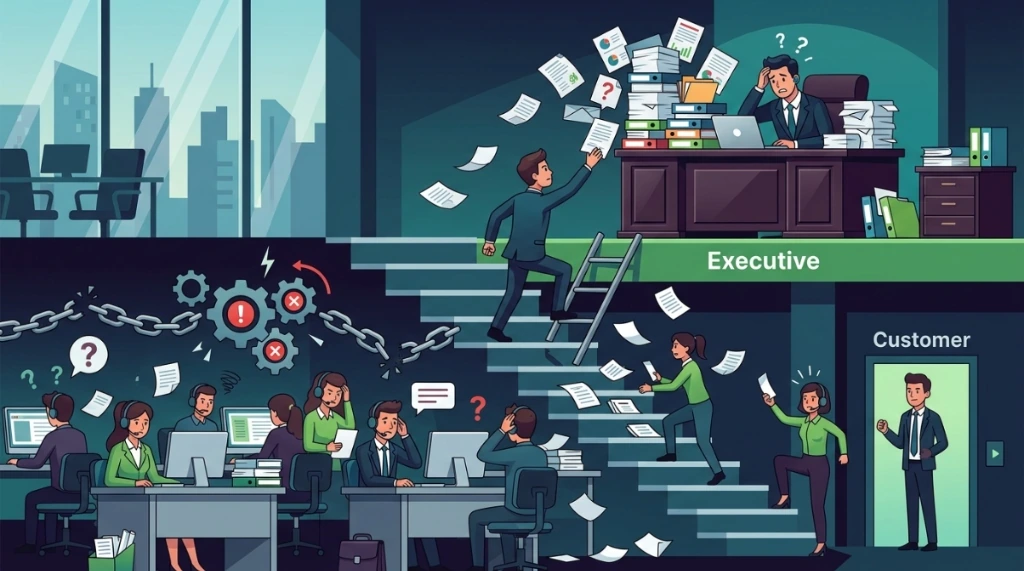
I lived through this recently. At the last company I worked for, leadership introduced an onboarding perk they believed was the pinnacle of white-glove service: the moment a contract was signed, the client received the personal mobile numbers of two company directors. The pitch was simple: if anything goes wrong, you have "a direct line to the people running the show".
What leadership thought was a competitive advantage turned into a daily operational nightmare for everyone on the front lines.
The domino effect of the executive shortcut#
The first point of failure is obvious: if you hand out the founder's personal phone number to every new customer, you kill your official support channels before the customer even submits their first ticket. Nobody fills out a portal form or waits three minutes in a chat queue when they can text the owner directly. The shortcut becomes the default.
From that point on, daily operations unravel fast.
Customers reach the frontline already wielding leverage: "Hurry up and fix this, I already talked to [the director]". Support technicians start interactions on the defensive, working under an implicit threat of executive escalation, dealing with someone who now behaves like a company shareholder.
The communication itself degrades. Because the client is supposedly a "friend", professional boundaries evaporate:
"Gotcha bro, no worries, we got your back, count on me man, all good..."
Rapport is great, but when a server goes down or a database corrupts, nobody wants casual banter from a buddy. Clients want technical clarity, transparent timelines, and contractual accountability. Forced informality backfires the moment a genuine crisis hits.
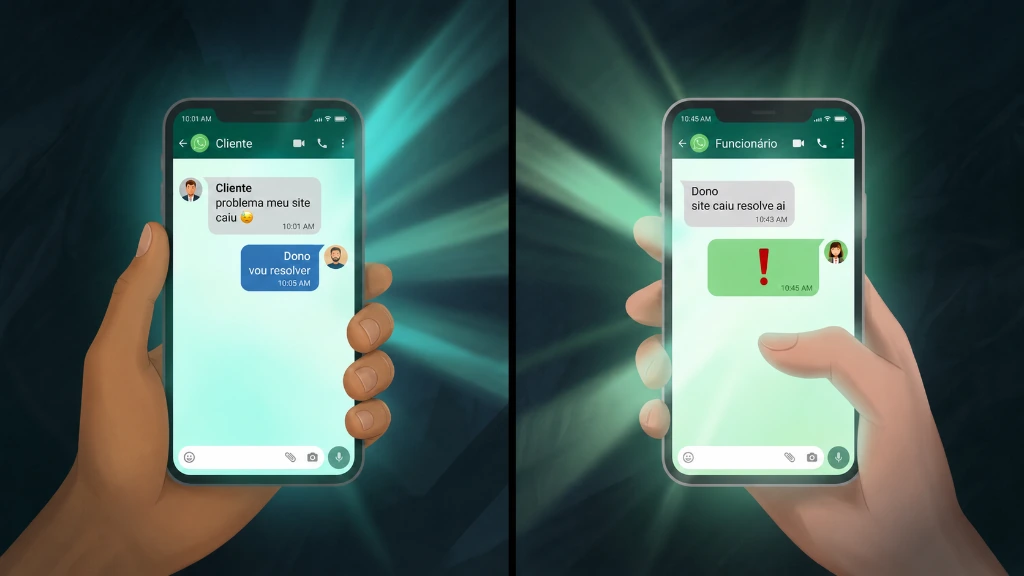
Then comes the biggest operational bottleneck: the documentation black hole. A director gets a WhatsApp message, takes a quick phone screenshot (usually cutting off the URL or error code) and forwards it to the support team with a brief note: "Take care of this urgently for them".
The technician suddenly has two problems instead of one:
- Figure out what the director meant by forwarding a fragmented screenshot.
- Reach out to the customer all over again to ask the basic diagnostic questions that should have been captured in a proper ticket.
No audit logs. No technical history. Hours wasted piecing together conversations that happened inside the private messenger of someone who doesn't operate the tools.
What psychology and queueing theory teach us about this trap#
This isn't just bad luck or disorganized teamwork. There is solid research explaining why this dynamic systematically breaks teams.
In social psychology, researchers Margaret Clark and Judson Mills, alongside Alan Fiske's work on relational models, distinguish between two foundational ways humans interact: exchange relationships and communal relationships.
In exchange relationships (business contracts), people provide benefits with the expectation of comparable, contractually agreed reciprocity. In communal relationships (family and friends), support is given out of mutual care, without scorekeeping or binding delivery timelines. When a company claims a customer is a "friend", it pushes communal expectations onto a commercial contract. The customer starts expecting immediate favors, after-hours attention, and informal privileges that no sustainable business model can support.
In operations research, queueing theory proves that inserting arbitrary, preemptive priority tasks into a queue degrades the average waiting time across the entire system. When every ticket is an emergency because "it came from the founder", nothing is an emergency. Customers who follow proper protocols and wait patiently in line are penalized, while those who cut the queue are rewarded.
To make matters worse, Dr. Gloria Mark's research at UC Irvine demonstrated that knowledge workers require an average of 23 minutes and 15 seconds to regain deep focus after a single unstructured interruption. A random screenshot dropped into team chat during an active investigation shatters concentration and dramatically increases human error.
A support workflow that actually scales#
My manager at the time saw the problem clearly and tried to shield the team as much as possible. But corporate reality often boils down to a simple truth: authority dictates, and caution follows.
Healthy operations don't run on executive favors or personal chat threads. They run on structured, predictable workflows designed to give technicians focus and customers fast, reliable resolutions.
A scalable, tiered support hierarchy follows a clear line:
Where AI and documentation change the game#
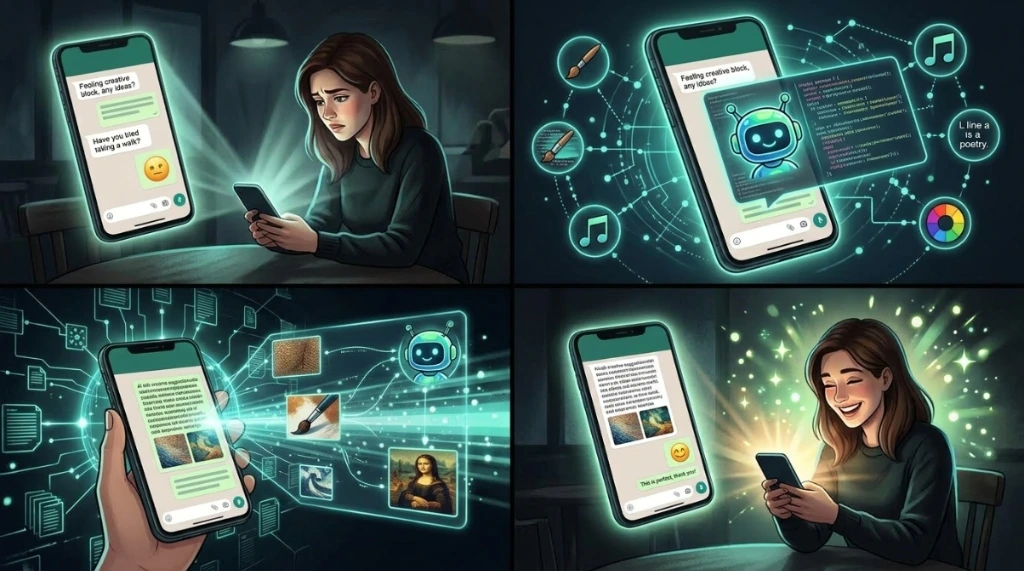
In modern support organizations utilizing artificial intelligence, this flow becomes significantly more efficient. Instead of burning technician time answering the same routine setup questions, solid documentation paired with an AI assistant resolves the majority of inquiries before a ticket is ever opened:
With this architecture:
- Customers don't sit in a queue for 10 minutes to ask a basic setup question. They get an instant answer sourced straight from verified documentation.
- If an issue is complex and requires human escalation, the entire conversation history and attempted steps transfer to the technician without missing context.
- Support technicians spend their bandwidth solving real problems instead of repeating manual instructions.
Four practical decisions to build a healthy operation#
If you manage teams or build organizational workflows, here are four concrete rules to implement:
- Document everything before attempting automation: AI models without clean, updated internal documentation just hallucinate faster. Write clear articles, maintain reference guides, and turn resolved tickets into searchable knowledge.
- Deploy an intelligent assistant at the front door: connecting generative models (such as OpenAI assistants or local open-source models) to your verified knowledge base resolves routine questions within seconds of contact.
- Shut down the executive backdoor completely: when a company director receives a support request on personal messaging apps, there should be only one acceptable, professional reply: "To ensure your request is tracked properly and our technical team has complete diagnostic context, please submit it through our official portal link".
- Keep communication professional in chat: respect does not require conversational slang. Customers place far more trust in teams that communicate with technical precision and professional composure than in companies that treat corporate support like a casual group chat.
The maturity filter: maintaining customer closeness without breaking the team#
Real customer proximity is resolving problems quickly, with accurate diagnosis and zero friction. Handing out executive phone numbers to beg for favors during an outage is just a symptom of broken internal processes.

Treating customers as "friends" to compensate for procedural gaps isn't a competitive advantage: it just shifts executive anxiety directly onto the shoulders of the frontline team. Growing companies understand that the greatest sign of respect for a customer is building an operation that runs reliably without needing shortcuts.
Was this article helpful?
Leave a quick reaction to help prioritize future technical guides:
See also

This post is licensed under CC BY-NC.
Comments
Join the discussion below.
0 comments