
The evolution of DDoS attacks: from simple packet floods to botnets and layer 7 vectors#
When discussing infrastructure stability and security, denial-of-service (DoS and DDoS) attacks represent one of the most dramatically transformed threat vectors over the past two decades.
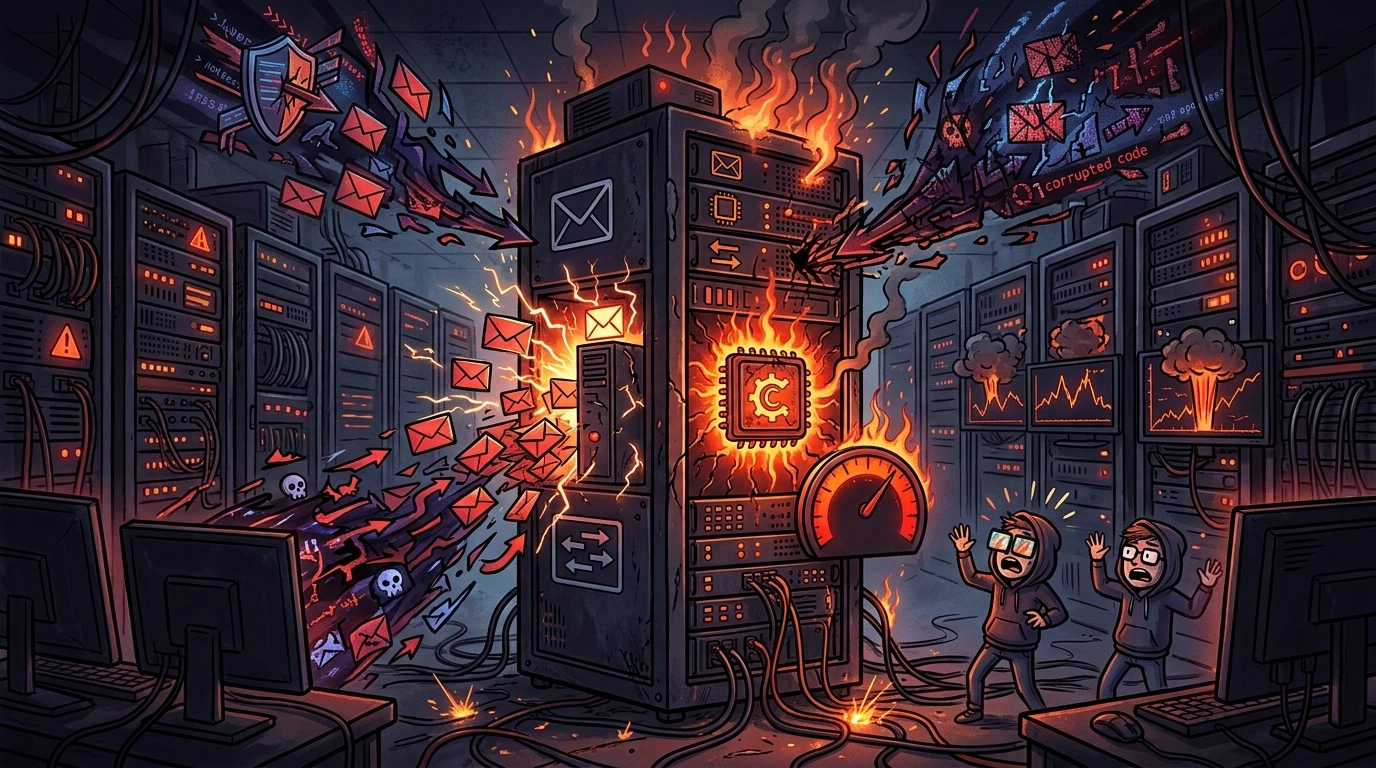
Historically, most occurrences involved straightforward packet floods or simple TCP/IP stack implementation bugs. Traffic volumes were modest, and patterns could be isolated with basic firewall rules. Today, the landscape is industrialized: attacks are powered by distributed zombie networks (botnets) coordinating millions of nodes across the globe.
Below is an analysis of how these vectors evolved, their operational impact, and modern defense strategies.
1. Botnet scale and the edge mitigation challenge#
In modern coordinated attacks, adversaries orchestrate thousands to millions of compromised hosts, spanning misconfigured servers to consumer IoT devices.
This distributed architecture introduces severe practical hurdles:
- Manual IP blocking is obsolete: Because malicious requests originate from residential ISPs and cloud providers worldwide, manual IP blacklisting at the edge is ineffective.
- Overwhelming volumetric bandwidth: Aggregated botnet bandwidth routinely exceeds dozens or hundreds of gigabits per second, saturating upstream provider links before packets even hit the target server.
2. Evolving vectors: beyond traditional SYN floods#
While the classic SYN Flood (which exhausts the kernel TCP connection backlog) still exists, modern campaigns employ diversified techniques:
UDP reflection and amplification#
Adversaries rarely send raw volume directly. Instead, they spoof the victim's source IP and send lightweight queries to open public services (such as DNS, NTP, or Memcached servers).
These intermediate servers reply to the victim with payloads exponentially larger than the initial query, amplifying attack volume with minimal attacker bandwidth.
Layer 7 application attacks#
Layer 7 assaults represent the most stealthy and damaging vectors:
- Execution model: Rather than flooding the network interface with junk traffic, bot nodes send structurally valid HTTP requests.
- Target surface: Attackers target expensive backend routes (such as complex database searches, report generation, or un-cached API queries).
- The impact: A few hundred carefully timed requests can push server CPUs to 100% and exhaust web server worker pools (Nginx, Apache, Node), bringing down the service without triggering volumetric network alarms.
3. The tactical role of DDoS: the operational smokescreen#
Beyond the downtime itself, modern DDoS attacks are frequently deployed as a tactical smokescreen.
While systems operations teams are fully consumed containing volumetric spikes and restoring user access, attackers exploit the alert noise and log floods to execute subtle application exploits, pivot internally, or exfiltrate sensitive data unnoticed.
How defense architecture evolved#
Mitigating modern DDoS solely at the origin server is technically unfeasible. Resilient architectures rely on Anycast networks and edge CDNs (such as Cloudflare, AWS CloudFront, or Fastly), where attack traffic is absorbed and scrubbed across hundreds of global Points of Presence (PoPs) before reaching origin backends.
Understanding these attack mechanics reinforces that DDoS defense requires proactive rate limiting, aggressive caching, and edge-level request inspection, beyond local firewall filtering.
Was this article helpful?
Leave a quick reaction to help prioritize future technical guides:
See also



This post is licensed under CC BY-NC.
Comments
Join the discussion below.
0 comments