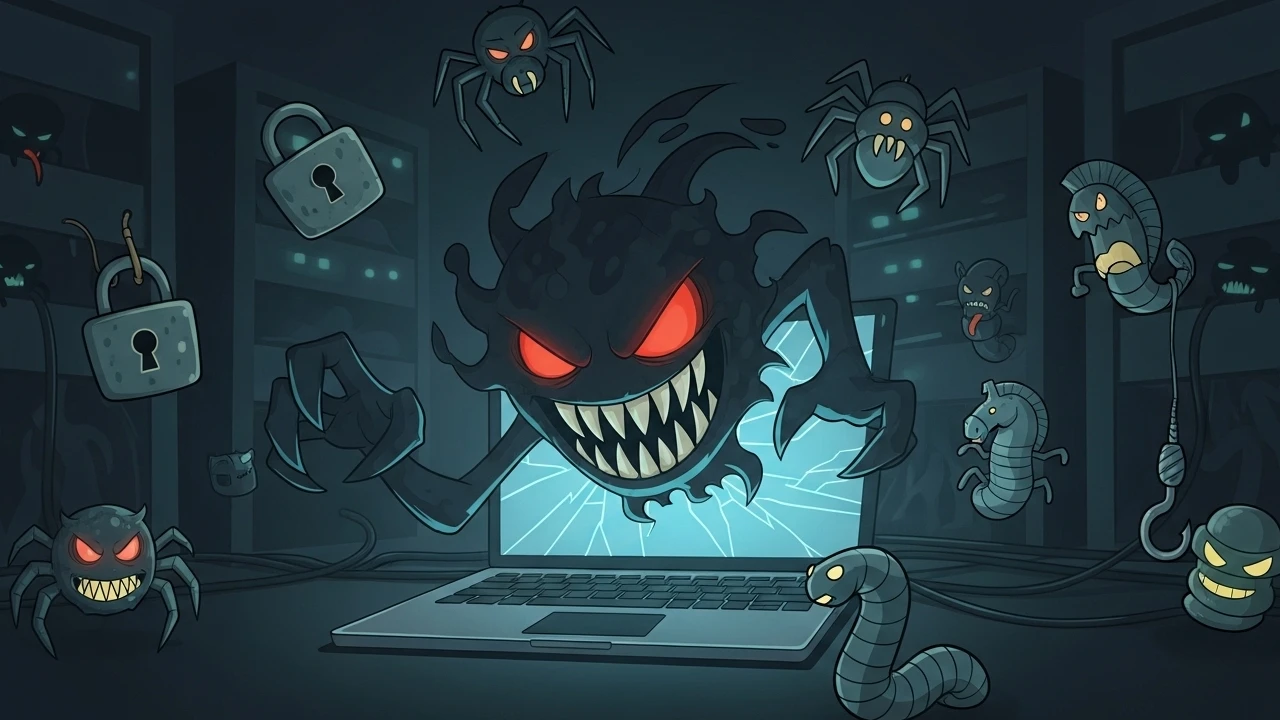
The 10 main malware types
Malware is a serious threat to businesses, with multiple variants capable of compromising systems and data. Below are the ten most relevant types and how to protect your environment against them effectively.
1. Ransomware#
This malware encrypts victim data and demands a ransom, often in cryptocurrency, for decryption. Protection starts with secure, tested backups stored separately from the primary network (offline).
2. Fileless malware#
It exploits vulnerabilities in legitimate software and operates directly in system memory without dropping malicious files on disk. Detecting it requires behavior-based monitoring and advanced security tooling.
3. Spyware#
Designed to monitor user activity and collect confidential data such as passwords and banking information. Beyond data theft, it can also degrade system performance. Be cautious with phishing emails and links, common entry points for this threat.
4. Trojan horse#
It disguises itself as legitimate software or harmless files to trick users and gain system access. It is frequently delivered through phishing campaigns and untrusted downloads.
5. Virus#
Like a biological virus, it attaches to legitimate programs and replicates once the infected file is executed. It can corrupt files, steal data, and support denial-of-service (DDoS) operations. Keeping antivirus signatures up to date is essential for detection and removal.
6. Rootkit#
Allows attackers to control a system remotely while remaining hidden. Because it operates at deep operating-system levels, removal is extremely difficult and may require full device reinstallation.
7. Adware#
Displays unwanted ads and may collect user browsing behavior data. While often more annoying than destructive, it can create pathways to more dangerous malware. Ad blockers and strict browser hygiene help reduce exposure.
8. Malvertising#
Malicious code is injected into otherwise legitimate online ads. Infection can happen by simply loading a page containing a compromised ad, even without a click. It is a stealthy and difficult-to-trace threat.
9. Wiper#
Its purpose is irreversible destruction of data by wiping system files completely. It is commonly used in cyberterrorism and industrial espionage campaigns to cause large-scale and permanent damage.
10. Botnets#
Botnets are networks of infected devices (bots) controlled by an attacker. They are used for large-scale DDoS attacks, spam operations, and credential theft. Their effectiveness is increasing as threat actors adopt AI techniques to build more adaptive malware.
How to protect your business from malware#
To strengthen enterprise security, adopt a layered defense model. Maintain regular offline backups, apply security patches as soon as they are available, and enforce least privilege so each user only has access strictly required for their role.
In addition, invest in modern security controls that combine prevention, detection, and automation. Cybersecurity is a continuous battle, and staying vigilant and one step ahead of digital attackers remains the best defense.
Executive prioritization for CIO and security teams#
In production, not every malware family has the same urgency. I usually split response priority into three levels:
- Immediate priority: ransomware, wiper, and botnets;
- High priority: fileless malware, trojan, and rootkit;
- Continuous priority: spyware, virus, adware, and malvertising.
This framework helps align risk, budget, and technical execution.
Was this article helpful?
Leave a quick reaction to help prioritize future technical guides:
See also

This post is licensed under CC BY-NC.
Comments
Join the discussion below.
0 comments